
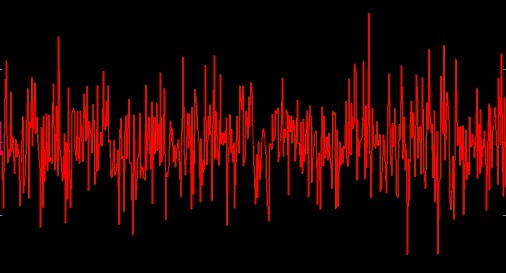
The theory that stock price changes have the same distribution and are independent of each other, so the past movement or trend of a stock price or market cannot be used to predict its future movement. The random walk hypothesis is a financial theory stating that stock market prices evolve according to a random walk and thus the prices of the stock market are uncertain.
In short, this is the idea that stocks take a random and unpredictable path. A follower of the random walk theory believes it's impossible to outperform the market without assuming additional risk. Critics of the theory, however, contend that stocks do maintain price trends over time - in other words, that it is possible to outperform the market by carefully selecting entry and exit points for equity investments. This theory raised a lot of eyebrows in 1973 when authorBurton Malkiel wrote "A Random Walk Down Wall Street", which remains on the top-seller list for finance books and which posits that past share prices are of no use in predicting future prices.
Random walk theory is diametrically opposed to technical analysis. The theoretical underpinning of technical analysis is that markets react in a consistent way to share price movements. By looking at charts of past price movements, investors can identify patterns which have occurred before, and can anticipate future price movements because the market tends to react in the same way. The actual lack of correlation of past and present can be easily seen. If a stock goes up one day, no stock market participant can accurately predict that it will rise again the next. Just as a basketball player with the “hot hand” can miss his or her next shot, the stock that seems to be on the rise can fall at any time, making it completely random.
The rebuttals to random walk theory are not meant to suggest that the vast majority of individuals are going to suddenly start outperforming the market. Even though this may be true over the past 3 years, history suggests that it is not likely to be the case 10 years from now. In other words, history suggests that this is an anomaly and there will be a reversion to the mean.
Malkiel maintains that a buy and hold strategy is best and individuals should not attempt to time (or beat) the market. Attempts based on technical, fundamental or any other analysis are futile. Admittedly, he does have a point.
 At a time when returns from the markets are tough to come by and expectations are low, a select band of companies have announced tax-free dividends for its shareholders. The list includes a host of PSU companies like SAIL, GAIL, Concor and Nalco, and also private sector companies like Cummins, Financial Technologies, Dabur and Crompton Greaves. While these companies have mostly announced interim dividends for the current financial year, since this is an attractive way of rewarding investors at a time when a large number of these investors may exit their holdings.



 Posts
Posts


