Sunday, December 21, 2008

Random Walk -- A hypothesis !!

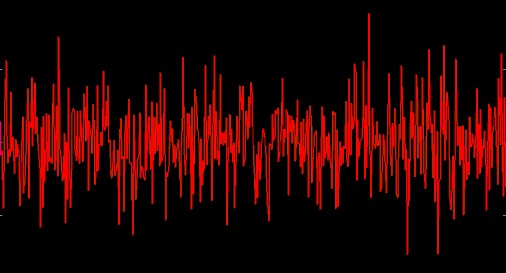
The theory that stock price changes have the same distribution and are independent of each other, so the past movement or trend of a stock price or market cannot be used to predict its future movement. The random walk hypothesis is a financial theory stating that stock market prices evolve according to a random walk and thus the prices of the stock market are uncertain. 

In short, this is the idea that stocks take a random and unpredictable path. A follower of the random walk theory believes it's impossible to outperform the market without assuming additional risk. Critics of the theory, however, contend that stocks do maintain price trends over time - in other words, that it is possible to outperform the market by carefully selecting entry and exit points for equity investments. This theory raised a lot of eyebrows in 1973 when authorBurton Malkiel wrote "A Random Walk Down Wall Street", which remains on the top-seller list for finance books and which posits that past share prices are of no use in predicting future prices.

Random walk theory is diametrically opposed to technical analysis. The theoretical underpinning of technical analysis is that markets react in a consistent way to share price movements. By looking at charts of past price movements, investors can identify patterns which have occurred before, and can anticipate future price movements because the market tends to react in the same way. The actual lack of correlation of past and present can be easily seen. If a stock goes up one day, no stock market participant can accurately predict that it will rise again the next. Just as a basketball player with the “hot hand” can miss his or her next shot, the stock that seems to be on the rise can fall at any time, making it completely random.

The rebuttals to random walk theory are not meant to suggest that the vast majority of individuals are going to suddenly start outperforming the market. Even though this may be true over the past 3 years, history suggests that it is not likely to be the case 10 years from now. In other words, history suggests that this is an anomaly and there will be a reversion to the mean.

Malkiel maintains that a buy and hold strategy is best and individuals should not attempt to time (or beat) the market. Attempts based on technical, fundamental or any other analysis are futile. Admittedly, he does have a point. 


Saturday, December 20, 2008

Bailouts & Bankruptcy--

It’s apocalyptic that most of the big financial firms and major Banks all across the globe are running out for their profits .They are trying hard to trim their lending and recover debts and many others are on the verge of collapsing. But many of us get perplexed at the very sight of bailout and bankruptcy. What exactly does it mean? Don't they lead to the same fate?

Bailout is an act of loaning or giving capital to a failing business in order to save it from bankruptcy, insolvency, or total liquidation and ruin. A bailout could be done for mere profit, for social improvement, or the bailout of a company might be seen as a necessity in order to prevent greater, socioeconomic failures.

Bankruptcy is a legally declared inability or impairment of ability of an individual or organization to pay their creditors. Creditors may file a bankruptcy petition against a debtor in an effort to recoup a portion of what they are owed or initiate a restructuring.

Its high time, to find out what has brought the current situation, whether there is excessive lending without considering the credit worthiness of the consumer or a corporate company or any malpractices which have led to this kind of collapse. A pattern has to emerge on the basis of this collapse and this can be taken up for discussion and debated as to what remedy and fail proof policies and laws can be introduced to prevent another BAILOUT.

Lehmann Brother is a fine example of a bankruptcy which has rattled the financial world and some more are coming but its unpredictable as to what extent and what is going to be the aftermath. Introducing parameters for predicting a collapse or a clear analytics on the financial losses made by Banks and financial institutions is the need for the hour and this theory should have been completed by now.

Friday, December 19, 2008

Home Loan Dilemma-- now or later???


Everyone who's working or searching a job or a housewife, husband,Mom,Dad,Bro,Sis , I and who doesn't want to have a home and live a lovely life- a secured one.Until recession struck economy badly, selecting a home loan was child's play. This was because Floating rates  were a few percentage points below the fixed rates.This was an attracting offer for the borrowers.But now if you are looking for a new home? Get ready to sweat it out when you apply for a loan.Home loans are getting more and more difficult to come by as some of the biggest players in the market tighten their mortgage norms. 


Inflation--The spiraling inflation and rising property prices have plunged the prospective borrowers in a dilemma. Moreover it is seen that there is a continuous  increase in the interest rates on home loans.Today if you or anyone for that matter  wants to go for a home loan, you think twice that is it the right time or it would be preferrable to wait for another 2-3 months;as the fixed rates are currently high - to the tune of 13 to 14 percent.Inflation has added the remaining  fuel to fire. RBI recently increased the cash reserve ratio (CRR) and the repo rate by 0.5 percent. Leading banks were quick to pass on the burden of hike to borrowers .Banks are in consultations with the government and the Reserve Bank of India to revise eligibility criteria for disbursing home loans. Currently, the cap is calculated based on one’s capacity to pay the equated monthly instalment (EMI) and other criteria.


In recent times, banks and institutions have tightened norms for some industries like call centres, IT professionals and investment bankers. Chidambaram said housing is an important sector and a major driver of the economy. "Steel, cement, bricks, pipes, wires, electrical equipment, construction, labour everything depends on housing," he added.So we can expect for certain cuts in the interest rates and a review of the eligibility criteria can help many to turn their dreams into reality--- "My Home"


Thursday, December 18, 2008

Inflation dives to nine-month low--

India's headline inflation fell to a nearly nine month low of 6.84 per cent mainly on account of cut in domestic fuel prices after nearly 20 per cent decline in the global crude oil prices and declining prices of vegetables, fruits, pulses and iron, steel items-- the lowest in nine months.A Rs 5 per litre cut in petrol prices and Rs 2 per litre reduction in diesel rate on December 6 helped bring down inflation.

At the same time, the government said it was seeking extra spending of about $9 billion for the current fiscal year to the end of March as part of a fiscal stimulus to lift economic growth and offset the impact of the global slowdown. 

Inflation, measured by wholesale price movement, dipped by 1.16 per cent for the week ended December 6 from the previous week, triggering demands from the industry for further cuts in key policy rates by the Reserve Bank.

Commenting on the decline, FICCI secretary general Amit Mitra said, "RBI should cut interest rate expeditiously and by a significant quantum. It must also ease availability of credit further."

Nosediving of inflation to 6.84 per cent coupled with falling oil prices is likely to trigger more lending rate cuts upto one per cent by Banks, economists said . Many state-owned banks and a few private sector banks had slashed their prime lending rates after RBI's monetary measures rate and finance minstry's calls for immediate rate reductions. However, if the decline in the inflation continues in this pace, that may pause policy hurdles by mid-next year.


Wednesday, December 17, 2008

Hedging programmes,still shortsighted--

Hedging programmes undertaken by companies in India are still generally shortsighted, driven to a large extent by market views and not always aligned with the risk philosophy of companies, revealed a survey conducted by Ernst and Young , a global leader in assurance, tax, transaction and advisory services, released  on titled Commodity Price Risk Management Survey 2008 . The survey pointed out that though companies understood the need for hedging and had the instruments available, the finer aspects of hedging such as basis risk and timing risk, which significantly affect hedge-cash flows are often ignored. 

It is for the first time in the country that a commodity risk management survey has been conducted with a view to throw light on market practices and provide perspective on structuring commodity price risk management operations.  The concept of commodity-price risk management in India has steadily gained ground. With the increasing volatility and growth in the paper markets, the time is ripe for companies to look at commodity-price risk management as an integral part of the strategy to manage their bottomlines, said Farrokh Tarapore, partner and industry leader,financial services, Ernst and Young. The unprecedented volatility in commodity markets has threatened structured margins in fundamental businesses like never before. For the first time, price-risk management is being seen as an all pervasive function touching every aspect of the business cycle. Commodity-price risk management is no longer limited to hedging. It is about managing price risk across the value chain, said Hemal Shah, associate director, financial risk services, EandY.


Source: By Commodities Bureau

Inexorable Salary cut continues in FY09--


Facing the economic meltdown the  companies have started laying off people and there's a big chaos in the organizations dealing with the cutting down of the salaries.The executives are scrambling two steps ahead of bankruptcy.It is expected to get worse in the coming six months.

ET reports "Employees in real estate, financial services, information technology (IT) and IT enabled services (ITeS) should prepare themselves for salary cuts of up to 15%. The first quarter of 2009 will see major cut in compensation levels and lower pay hikes," says Kris Lakshmikanth, chief executive of recruiting firm Headhunters India.

Globally, the growth in salaries may be even slower. The International Labour Organisation forecasts in its latest report on wages that they will grow by at best 1.1% in 2009, compared to 1.7% in 2008. In most companies, lower-and-middle-level employees would be the first to face the axe.While companies in services and real estate have already begun the slash-and-burn, the manufacturing industry is waiting for next quarter results before swinging into action.
 
The software sector's other big players, Infosys and Wipro, have already announced plans for single-digit salary increases in FY09. Things look equally grim for executives in real estate companies. The financial services companies ET contacted declined to comment on plans to revise salaries over the next quarter.

This new year can only bring ray of hopes as almost all the industries are having a tough time and will take next six months to get stable to an extent.The year's going to be hard on the executives because of low  or revised pay packages.


Tuesday, December 16, 2008

Madoff's Ponzi Scandal


Investors sent stocks lower as anxiety over the growing list of firms affected by investment manager Bernard Madoff magnified Wall Street’s concerns about the health of the financial sector. Madoff stands accused of operating an elaborate Ponzi scheme, using cash from new investors to pay off older ones, to the tune of $50 billion. US authorities allege that Madoff delivered consistently strong returns to clients by secretly using the principal investment from new investors for payments to other investors in what is known as a "pyramid fraud." The alleged offenses only came to light because he could no longer raise the money to keep his scheme going, according to the US Securities & Exchange Commission.

The 70-year-old Madoff, well respected in the investment community after serving as chairman of the Nasdaq Stock Market, was arrested as he was suspected of leading a $50 billion Ponzi scheme.Global finance giants have admitted huge potential losses in the suspected pyramid fraud scam run by the Wall Street veteran. HSBC has potential exposure of about $1.5 billion, the Financial Times reported.The Spain's largest bank said its investment fund Optimal has a 2.33 billion euro exposure to Madoff Securities. France's largest listed bank ,BNP Paribas said it has a potential 350 million exposure. Santander, the eurozone's largest bank by market value, said its clients had an exposure of 2.33 billion euros to Madoff's investment funds. Nomura Holdings, Japan’s biggest brokerage, said it had a $303 million exposure related to Wall Street trader Bernard Madoff,

Madoff’s alleged fraud has apparently shook the world. More so because it is stated to the world’s biggest financial fraud till date. Shock waves from Bernard Madoff's alleged fraud spread globally, as charities, wealthy individuals and banks disclosed losses from the prominent Wall Street trader's investment management business.Madoff claimed that he had only 200 to 300 million dollars left, while prosecutors were uncertain how much money Madoff's clients, among them banks, prominent investors and celebrities, have lost.

Bernard L Madoff Investment Securities LLC, operated as an international market broker with a separate investment advisory business for private clients. The advisory business was kept secretive by Madoff and served between 11 and 25 clients with 17.1 billion dollars under his management. New York hedge fund manager and Wall Street legend Bernard Madoff has been charged with what could be the largest Ponzi scheme in history.