Friday, May 15, 2009

Value at Risk (VAR or VaR)

Value at Risk  is a widely used measure of the risk of loss on a specific portfolio of financial assets.Value at risk  has been called the "new science of risk management" A technique used to estimate the probability of portfolio losses based on the statistical analysis of historical price trends and volatilities.VaR is able to measure risk while it happens and is an important consideration when firms make trading or hedging decision.

e.g. Let 0 be the current time. With value-at-risk, we summarize a portfolio's market risk by reporting some parameter of this distribution. For example, we might report the 90%-quantile of the portfolio's single-period USD loss. This is called one-day 90% USD VaR. If a portfolio has a one-day 90% USD VaR of, say, USD 5MM, it can be expected to lose more than USD 5MM on one trading day out of ten. This is illustrated in Exhibit 1.

Example: One-Day 90% USD VaR
Exhibit 1

VaR has five main uses in finance: risk management, risk measurement, financial control, financial reporting and computing regulatory capital.A risk manager has two jobs: make people take more risk the 99% of the time it is safe to do so, and survive the other 1% of the time. VaR is the border.Common parameters for VaR are 1% and 5% probabilities and one day and two week horizons, although other combinations are in use.Although it virtually always represents a loss, VaR is conventionally reported as a positive number. A negative VaR would imply the portfolio has a high probability of making a profit, for example a one-day 5% VaR of negative $1 million implies the portfolio has a 95% chance of making $1 million or more over the next day.

To sum up,Value-at-Risk (VaR) measures the worst expected loss under normal market conditions over a specific time interval at a given confidence level.It has 3 main components e.g.

  • What is the most I can - with a 95% or 99% level of confidence -  expect to lose in dollars over the next month?
  • What is the maximum percentage I can - with 95% or 99% confidence - expect to lose over the next year?
"VAR question" has three elements: a relatively high level of confidence (typically either 95% or 99%), a time period (a day, a month or a year) and an estimate of investment loss (expressed either in dollar or percentage terms). 

Thursday, May 14, 2009

Dash to Trash

A term relating to when investors flock to a class of securities or other assets, bidding up prices to beyond what can be justified by valuation or other fundamental measures. While the dash-to-trash effect can occur within any type of security, the phrase is typically used to describe low-quality stocks and high-yield bonds, both of which can be subject to periods of overbuying in the markets. 

As the name graphically implies, investors are buying low-quality assets or assets that do not correctly price in the risks associated with them. The dash to trash often occurs near the end of a prolonged bull market, when investors begin to seek higher returns regardless of the risks involved. The longer it has been since a market downturn, the more likely that large pockets of investors feel bulletproof.


Source:Investopedia


The only thing premanent is "Change"

Willingness to change is a strength, even if it means plunging part of the company into total confusion for a while.

Warren Buffet-at a glance

Warren Buffett, a billionaire investor is the world's second-richest person, and perhaps America's most-revered capitalist. Buffett, 78, bought Berkshire, a struggling textile mill, in 1965,whose market value is approx $145 billion at present. Berkshire owns close to 80 companies. According to Berkshire's latest proxy filing, as of February 28, Buffett owned 26.9 per cent of Berkshire in aggregate and controlled 31.8 per cent of the company's voting power. Berkshire's stock price is high, trading in the last year for high five-figure and low six-figure amounts for a Class "A" share, because there are few shares outstanding. Buffett does not believe in stock splits and encourages long-term investing.

Buffett has nearly all his net worth, estimated in March at $40 billion by Forbes magazine, invested in Berkshire. He has said every Berkshire share he has will go to philanthropies after his death. In June 2006, he pledged 85 percent of his net worth to the Bill & Melinda Gates Foundation and four family charities. He supports several charities and nonprofit offering programs for the poor, hungry and homeless.Buffett tells his shareholders that he thinks of them as "owner-partners" who will retain their part-ownership in Berkshire indefinitely.

Buffett draws a $100,000 annual salary to run Berkshire. He drinks five cans of Cherry Coke a day. Buffett has lived in the same house for a half-century, a 10-room, five-bedroom home on less than three-quarters of an acre in Omaha, near his office. The home was assessed at $727,600 last year. Buffett plays ukulele and is a bridge partner of Bill Gates, the Microsoft Corp chairman and Berkshire director.

Thursday, May 7, 2009

Obamanomics

Barack Obama has declared his position on many political issues through his public comments and legislative record. If leadership is defined as recognizing a crisis, addressing its challenges, and setting new directions while remaining true to one's values, then Barack Obama is already demonstrating his strengths as a leader. He has inherited an economic crisis worse than any the nation has experienced since the Great Depression.

Obamanomics is  the economic philosophy of 2008 democratic presidential candidate Barack Obama. Obamanomics calls for lower tax rates for companies that meet certain criteria, such as providing decent healthcare and maintaining a U.S. workforce and headquarters. Obama's economic platform also calls for higher taxes for high-income families and investment in education, healthcare and the sciences.

 Obamanomics generally stands in opposition to supply-side, or "trickle-down", economics, which holds that people  should keep more of what they earn because they will spend that money, promoting economic growth. It believes that the  active government intervention and monetary policy can smooth out bumps in economic cycles and promote stability.President Bush's tax cuts are scheduled to expire at the end of 2010. At that time, assuming the economy has entered a recovery, President Obama's budget will restore the top two marginal income tax rates to their 1990s levels of 36% and 39.6% for individuals earning more than $200,000 and couples earning more than $250,000. These changes will affect only the top 3% of taxpayers, the group that has enjoyed the largest gains in income and wealth over the last decade.

The real risk lies in the possibility that the economy's recovery starts later and is much weaker than the economic assumptions in the budget. In this case, President Obama will have to adjust his plans while remaining true to his values. In a very few days, he has already demonstrated that he has the leadership skills to rise to the challenge.

Art of Short selling


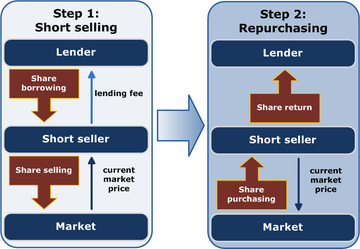
Short selling or "shorting" is the practice of selling a financial instrument that the seller does not own at the time of the sale. If you sell a stock you don't own, you are selling short.Short selling is done with the intent of later purchasing the financial instrument at a lower price. Short-sellers attempt to profit from an expected decline in the price of a financial instrument.

Short selling allows investors to profit from falling stock prices. "Buy low, sell high" is the goal . A short sale reverses the order of a typical stock purchase: the stock is sold first and bought later.

Short selling is a marginable transaction. One needs to open a margin account to sell short. This is the same account you would use if you want to use your stocks as collateral margin to trade in the markets.When you open a margin account, you must sign an agreement with your broker. This agreement says you will maintain a cash margin or pledge your stocks as margin.

Short selling is not complex, but it's a concept that many investors have trouble understanding. But Shorting is very, very risky. The mechanics behind a short sale result in some unique risks.
  1. Short selling is a gamble
  2. Losses can be infinite
  3. Shorting stocks involves using borrowed money(Margin Trading)
  4. Short squeezes can wring the profit out of your investment
  5. Even if you're right, it could be at the wrong time.
The two primary reasons for selling short are opportunism and portfolio protection. A short sale provides the opportunity to profit from the overpriced stock. Short sales are also used to protect an investor's portfolio against a market downturn. It protects portfolios against erosion due to a broad market decline. Short selling is essential for proper functioning of the stock market as it provides essential liquidity which in turn leads to proper price discovey.

Tuesday, May 5, 2009

Back to 12k


The buzz was back on Dalal Street as FIIs pumped in Rs 1,417 crore to help Sensex notch its biggest single-day gain in seven months. The 30-share BSE Sensex rose 6.4%, or 731.5 points, to close at 12,134.75, with FIIs largely responsible for the spectacular surge in stock prices. Shares from the metal, banking and IT sectors were the best performers. The coincidence of a host of factors sent the domestic indices skyrocketing.Economic parameters would increasingly get better hereon.

A positive government view on P-notes in a state affidavit to the Supreme Court and strong FII inflow; optimistic manufacturing data from China, and the taking of fresh positions on the first day after F&O expiry, all this after a four-day closure of the market — served to push stocks up.

From October 2008 when the Sensex was last seen at 12k to now, only 18 of the 30 Sensex stocks have ended with gains, while the rest have declined. But what’s interesting is that this time around the rally appeared to be fairly sector-agnostic and stock-specific.

In terms of contribution to the index in its 12k-to-12k sojourn, Reliance Industries (plus 295 points) and Infosys Technologies (plus 211 points) chipped in the most, while poor performance by the beleaguered IT major Satyam Computers (minus 244 points) and L&T (minus 100 points) restrained the index.

So,BSE's benchmark Sensex finally managed to breach 12,000 mark but will it able to maintain the psychological level. Many economists and market analysts have warned that the surge in stock prices globally and in India could be a short-lived reaction to the fiscal packages announced by governments.